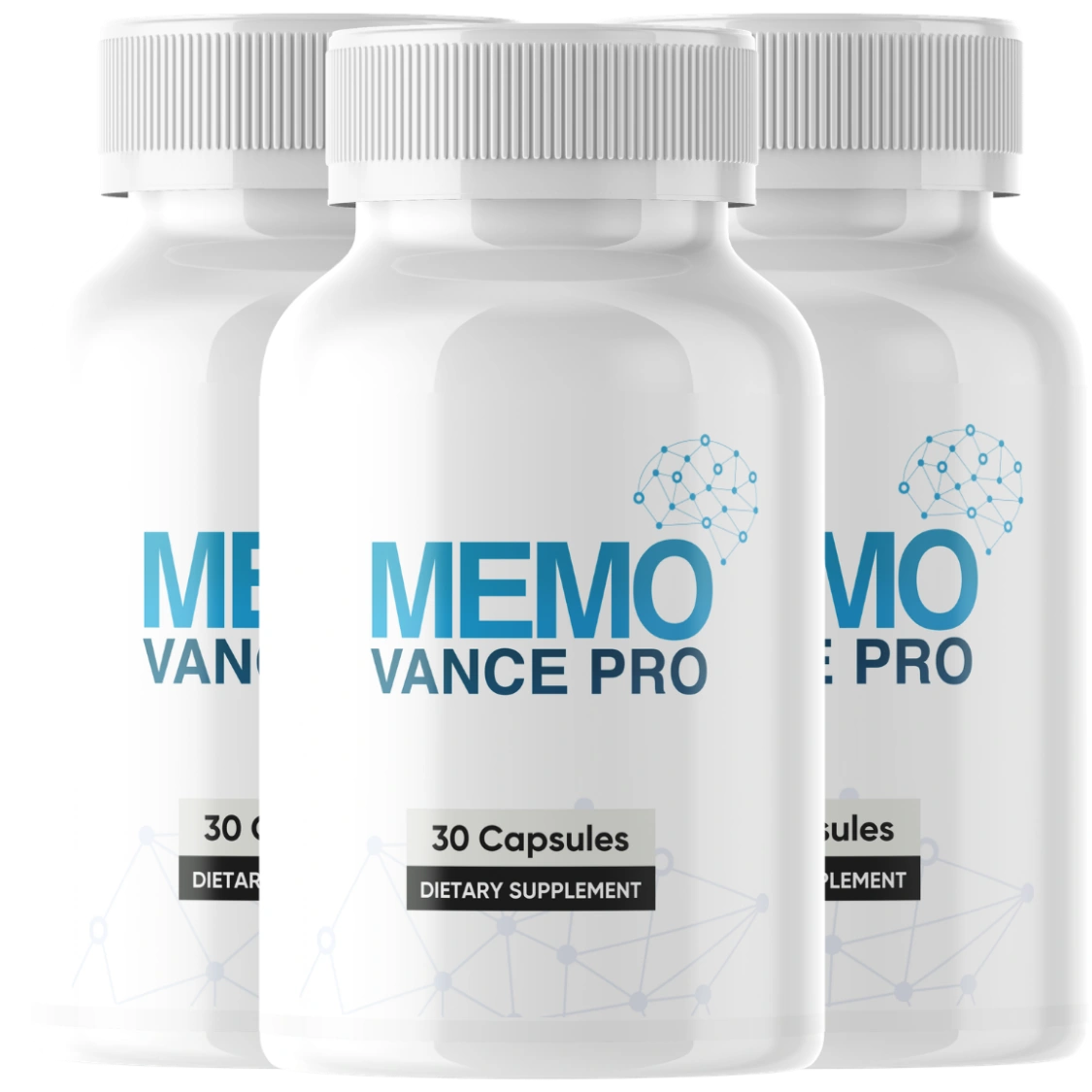
MemoVance Pro Official Website › Supplement Facts
Supplement FactsMemoVance Pro Label: Supplement Facts Explained
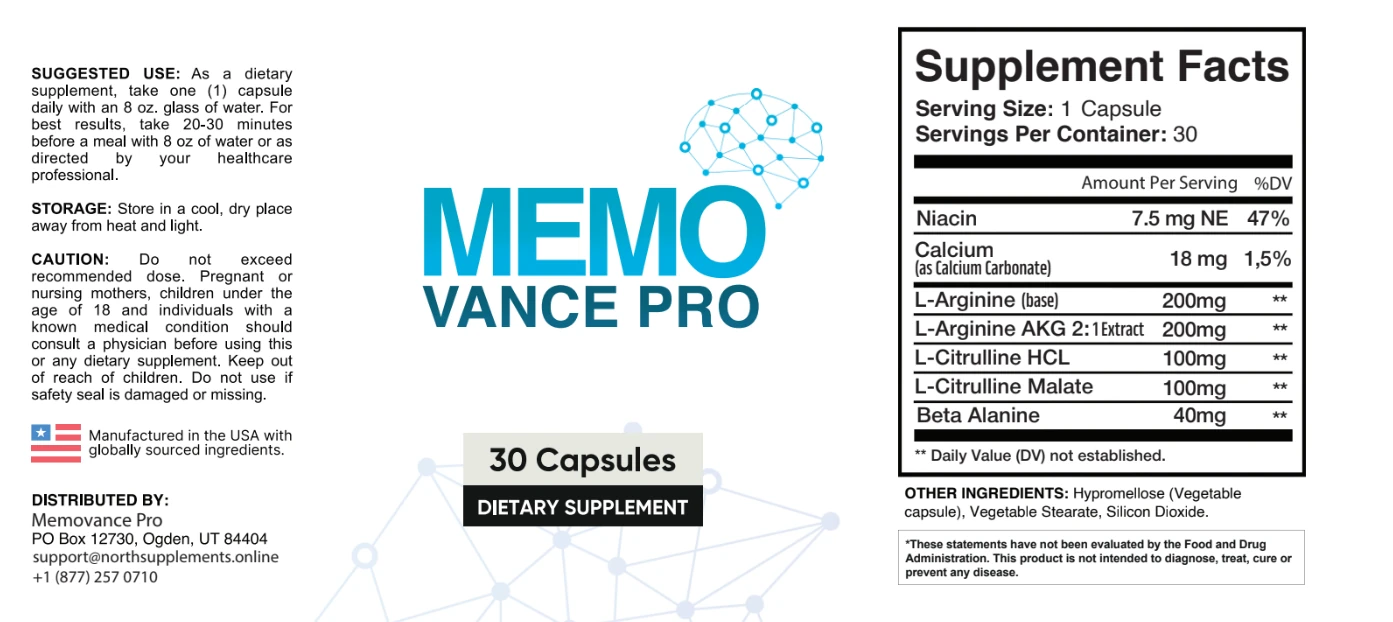
Each MemoVance Pro serving is one capsule, with 30 servings in a bottle.
Niacin 7.5 mg NE gives 47% of the Daily Value, alongside calcium 18 mg and five amino acids that add to 640 mg.
See what each one does on the ingredients page.
The panel in text, the footnote explained, and the rest of what the artwork carries.
The MemoVance Pro panel, as the bottle prints it
Every row and every figure, transcribed rather than summarised.
| Row | Amount per serving | % Daily Value |
|---|---|---|
| Niacin | 7.5 mg NE | 47% |
| Calcium (as Calcium Carbonate) | 18 mg | 1,5% |
| L-Arginine (base) | 200 mg | † |
| L-Arginine AKG 2:1 Extract | 200 mg | † |
| L-Citrulline HCL | 100 mg | † |
| L-Citrulline Malate | 100 mg | † |
| Beta Alanine | 40 mg | † |
Serving size: 1 capsule. Servings per container: 30. Transcribed as printed, including the European decimal comma on the calcium row. The dagger is the panel's own footnote mark.
The footnote under the table reads that no Daily Value has been established for the marked rows. It is a statement about the reference standard, not about the ingredient: every one of those five rows still carries its own milligram figure immediately to its left.
Add the five amino acid rows together and the total is 640 mg per capsule. With the two nutrients that comes to 658 mg of declared material inside a size 0 or size 1 shell, which is a sensible fill for a capsule somebody has to swallow every morning.
What the MemoVance Pro serving line commits the bottle to
The two lines above the table, and why they make this panel easy to read.
Two lines sit above the table and they do more work than they look like they do.
Serving size: 1 capsule. Every figure in the column beside it belongs to one capsule. On a panel where the serving is two or three capsules, the row amounts have to be divided before they can be compared with anything, and that is where most label-reading mistakes happen. Here no arithmetic is needed.
Servings per container: 30. With a once-daily instruction, a bottle is exactly one month. That makes the pack ladder unusually easy to read: two bottles is sixty days, three is ninety, six is half a year, and none of it needs working out on a calculator.
The two lines together are also what lets a buyer check the bottle they received. Count the capsules, read the serving size, and the panel either matches the label on the front or it does not.
The footnote mark on five MemoVance Pro rows, in plain words
What the mark means, and the case where it would actually conceal something.
A percentage in the right-hand column tells you how one serving compares with a daily reference intake set for the general population. Those references exist for vitamins and minerals. They do not exist for individual amino acids, so a panel carrying arginine has nothing to put in that column and marks it with a footnote instead.
That mark is frequently misread as an amount being withheld. It is the opposite: the amount is right there in the middle column, and it is the reference standard that is missing. All five of this bottle's marked rows carry figures: L-Arginine (base) at 200 mg, L-Arginine AKG 2:1 Extract at 200 mg, L-Citrulline HCL at 100 mg, L-Citrulline Malate at 100 mg, Beta Alanine at 40 mg.
The two rows that do carry percentages are the two nutrients. Niacin at 47 per cent and calcium at 1,5 per cent are the only figures on this panel that can be compared with a national reference at all, and the honest dosage section works through what each of those percentages implies.
On a panel that prints one blend total and a dagger beside it. There the mark does hide the split between ingredients, and no reader can tell whether a 500 mg blend is 490 mg of one thing. This panel gives every row its own line, which is what makes the rest of this website possible.
What else the MemoVance Pro artwork carries
Nine things the bottle prints besides the panel.
A Supplement Facts panel is only part of what is printed on the bottle. Reading the rest of it is the fastest way to work out how much a label is willing to tell you.
| What the artwork prints | As it appears |
|---|---|
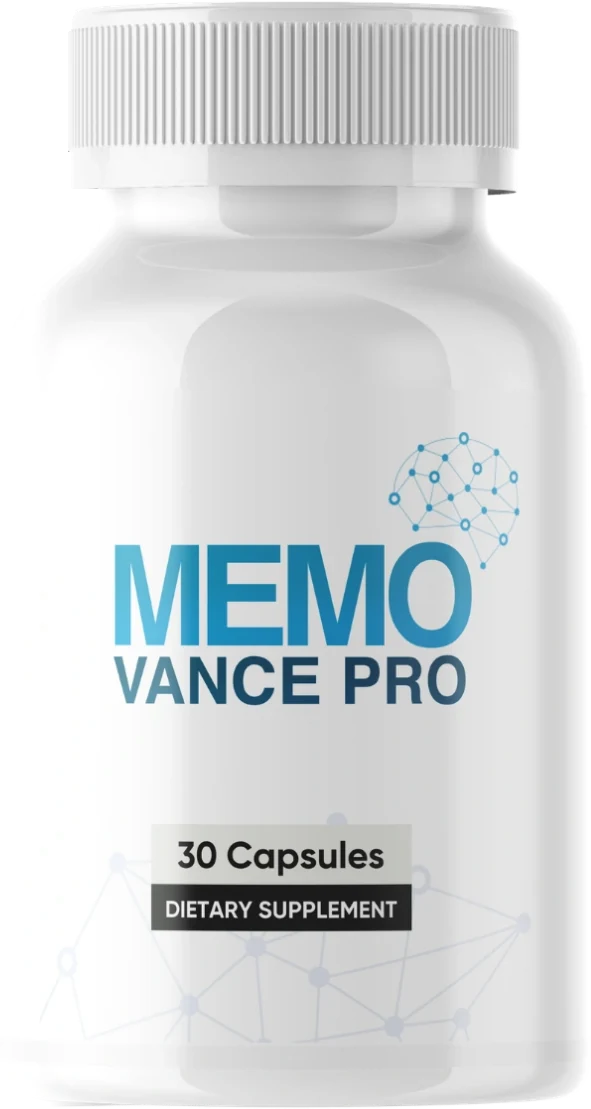
| Product name and subtitle | MemoVance Pro, with the line 30 Capsules · Dietary Supplement. |
| Suggested use | “As a dietary supplement, take one (1) capsule daily with an 8 oz. glass of water. For best results, take 20-30 minutes before a meal with 8 oz of water or as directed by your healthcare professional”. |
| Other ingredients | Hypromellose (Vegetable capsule); Vegetable Stearate; Silicon Dioxide. |
| Caution | Do not exceed recommended dose. Pregnant or nursing mothers, children under the age of 18 and individuals with a known medical condition should consult a physician before using this or any dietary supplement. Keep out of reach of children. Do not use if safety seal is damaged or missing. |
| Storage | Store in a cool, dry place away from heat and light. |
| Origin statement | “Manufactured in the USA with globally sourced ingredients”. |
| Distributed by | Memovance Pro, PO Box 12730, Ogden, UT 84404. |
| Contact on the bottle | +1 (877) 257 0710 and [email protected]. |
| FDA statement | The standard sentence that these statements have not been evaluated by the Food and Drug Administration and that the product is not intended to diagnose, treat, cure or prevent any disease. |
Transcribed from the label artwork shipped with this product.
Two of those rows are worth pausing on. The origin statement is a manufacturing claim about where the capsule was filled and where its raw materials came from, and it is the only production statement on the bottle: no manufacturer is named anywhere on the artwork, only a distributor.
The distributor block gives a postal address, a telephone number and an email. A buyer holding the bottle can therefore reach somebody about the product itself, which is separate from the desk that took the payment. Both routes, and what each one can actually answer, are set out on the contact page.
Where the MemoVance Pro panel sits in the US labelling rules
What the panel had to print, and the one place a formulator could have hidden something.
Supplement Facts is a defined format rather than a design choice, and knowing what the format requires makes it clear which parts of this panel were decisions and which were obligations.
The serving size, the servings per container, the name of each dietary ingredient and its quantity per serving are all required. So is a percentage of Daily Value where one exists, and the footnote where one does not. So is the other-ingredients line beneath the box. None of that is where a formulator has discretion.
The discretion is in what counts as one ingredient. A panel may group several components into a proprietary blend and print a single total, which is legal and common, and it is the decision that makes a formula unreadable. This bottle did not take that option.
The mineral rules explain one more detail. Calcium is declared as elemental calcium with the salt named in brackets, which is why the row reads 18 mg rather than the larger weight of carbonate that carries it. The absorption literature on calcium salts works in the same elemental units, so the two are directly comparable.
For anything beyond the label itself, the FDA's own questions and answers on dietary supplements covers what the agency does and does not do before a product reaches a shelf, and the NIH Office of Dietary Supplements publishes the consumer version of the same material.
Honest label analysis: what a printed MemoVance Pro figure is worth
The distance between a declaration and an assay, stated once.
A number on a panel is a declaration by the company that fills the bottle. It is not an assay result, and the difference is worth holding onto even while praising a label for printing seven of them.
What a declared figure establishes is intent and accountability. The manufacturer has committed in writing to what the capsule contains, in a format that can be compared against any other bottle in the category and against the research literature. That is a real thing, and a proprietary blend removes it.
What it does not establish is the contents of the capsule in your hand. Only an independent assay of that lot does that, and no such document is published for this product. Lot MEM-26/TH-4477 and certificate reference MEM-4477-26-TH are filing references held by this desk, which is a paper trail rather than laboratory proof, and the batch verification page is explicit about the difference.
Two other things a panel is silent on by design: the quality of the raw material behind a row, and the overage a manufacturer builds in so a figure still holds at the end of shelf life. Neither is a criticism of this bottle specifically. Both are true of every Supplement Facts panel ever printed, and NCCIH's guidance on using supplements sensibly makes the same point in more general terms.
MemoVance Pro panel questions, answered
How many capsules are in a MemoVance Pro bottle?
Thirty, and the serving size is one, so the servings-per-container line also reads 30. One bottle is one month.
What does the dagger mean on the MemoVance Pro panel?
That no Daily Value has been established for that row. It refers to the reference standard, not to the amount, and the amount is printed in the column beside it.
Does the MemoVance Pro panel show a proprietary blend?
No blend total appears on the artwork. Each of the seven rows carries its own figure, which is what allows every amount to be compared with published research.
What is the total weight of actives in a MemoVance Pro capsule?
658 mg of declared material: 640 mg across the five amino acids, 18 mg of calcium and 7.5 mg NE of niacin.
Is the MemoVance Pro capsule shell gelatin?
It is hypromellose, a plant cellulose, named on the other-ingredients line. Nothing animal-derived appears on the artwork.
Where is MemoVance Pro manufactured?
The bottle carries a manufacturing origin statement in the United States with globally sourced ingredients, and a distributor block with a Utah postal address. No manufacturing company is named on the artwork.
Who publishes this MemoVance Pro website?
- Zamfirescu I, Carlson HE. Absorption of levothyroxine when coadministered with various calcium formulations. Thyroid. 2011;21(5):483-6. PMID 21595516. https://pubmed.ncbi.nlm.nih.gov/21595516/
- Javaid A, Mudavath SL. Niacin-induced flushing: Mechanism, pathophysiology, and future perspectives. Arch Biochem Biophys. 2024;761:110163. PMID 39322100. https://pubmed.ncbi.nlm.nih.gov/39322100/
- Guarve K, Kriplani P. HPMC- A Marvel Polymer for Pharmaceutical Industry-Patent Review. Recent Adv Drug Deliv Formul. 2021;15(1):46-58. PMID 34086557. https://pubmed.ncbi.nlm.nih.gov/34086557/
- EFSA Panel on Food Additives and Nutrient Sources added to Food (ANS). Re-evaluation of silicon dioxide (E 551) as a food additive. EFSA J. 2018;16(1):e05088. PMID 32625658. https://pubmed.ncbi.nlm.nih.gov/32625658/
- Using Dietary Supplements Wisely. National Center for Complementary and Integrative Health, National Institutes of Health. https://www.nccih.nih.gov/health/using-dietary-supplements-wisely
- Dietary Supplements: What You Need to Know. Office of Dietary Supplements, National Institutes of Health. https://ods.od.nih.gov/factsheets/WYNTK-Consumer/
- Questions and Answers on Dietary Supplements. U.S. Food and Drug Administration. https://www.fda.gov/food/information-consumers-using-dietary-supplements/questions-and-answers-dietary-supplements
Order MemoVance Pro and check the panel against the bottle
Seven rows, seven figures, thirty capsules and 180 days from the date of purchase. Everything on this page can be read off the label you receive.
$79, $69 or $49 a bottle by pack size · 180-day money-back guarantee
Order MemoVance Pro On The Official WebsiteLot MEM-26/TH-4477 · 30 capsules · 7 rows, 7 printed figures