MemoVance Pro Official Website › Blog › Three Ways A Printed Weight Misleads
Three Ways A Printed Supplement Weight Misleads
A milligram figure on a Supplement Facts panel looks like the least ambiguous thing on the bottle. It is not. Three separate conventions can sit between the number you read and the amount you swallow, and all three are legal, standard and invisible.
- The counter-ion: a salt or a paired acid is part of the printed weight, so a 100 mg row of citrulline malate is not 100 mg of citrulline.
- Elemental declaration: mineral rows print the mineral, not the salt, so the raw material in the capsule weighs considerably more.
- The unit itself: niacin equivalents count what the body can make from tryptophan as well as the vitamin, which is not the same as milligrams of niacin.
- None of the three is a trick. All three are standard, and a reader who knows them can compare two labels properly.
- A fourth, and the commonest mistake of all: reading a row without first reading the serving size above it.
One: the counter-ion is part of the weight
Most amino acids and minerals are sold as salts rather than in free form, because salts are more stable, easier to handle and often more soluble. A salt has two halves and the printed weight is usually the weight of both.
Citrulline hydrochloride carries a chloride. Arginine alpha-ketoglutarate carries a keto-acid. Magnesium citrate carries citric acid. In each case a fraction of the printed milligrams is the counter-ion, doing a job in the manufacturing process and contributing nothing to the reason the ingredient is there.
The share varies enormously. On a hydrochloride it is small. On a malate or a citrate it can approach half. That is the difference between a rounding error and a material overstatement of what a row delivers.
Where a label helps and where it does not
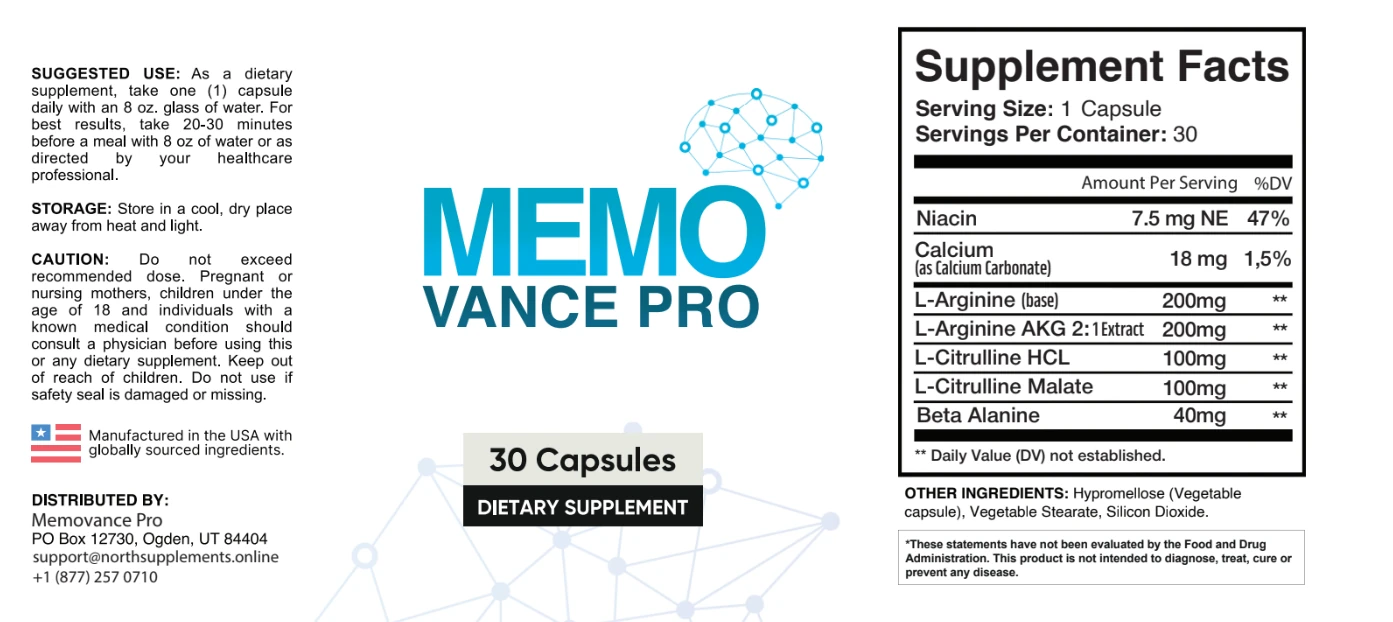
A good label names the ratio. This bottle's arginine AKG row prints “2:1” on the face of the panel, which is exactly the right thing to do and more than most labels in the category manage.
Its citrulline malate row prints no ratio, which leaves the arithmetic below unfinished. The house style clearly exists on this label; it simply was not applied to that row.
The worked example on this panel
Citrulline malate is sold at ratios from one-to-one to two-to-one, and the ratio decides how much of a printed weight is citrulline.
| If the citrulline malate is | Citrulline in a 100 mg row | Malic acid in it |
|---|---|---|
| 2:1 by molar ratio | About 72 mg | About 28 mg |
| 1.5:1 | About 66 mg | About 34 mg |
| 1:1 | About 57 mg | About 43 mg |
| Unstated on the label | Somewhere between 57 and 72 mg | The rest |
Worked from the molecular weights of citrulline and malic acid. The ratio is what decides the answer, and a panel that leaves it out leaves this sum unfinished.
So a 100 mg citrulline malate row delivers somewhere between about 57 and 72 mg of citrulline. The range is not large in absolute terms, and it is the principle that matters: the number on the panel is not the number of interest, and only the label can close the gap.
It also matters because the malate half is not inert filler. A meta-analysis of citrulline malate and muscle strength pooled the trials that made the ingredient popular, and a 2025 head-to-head ran citrulline against an equivalent citrulline malate dose specifically to ask whether the malate contributes anything at all. That question is open, which is a further reason to want the ratio printed.
Two: minerals are declared elemental
United States panels declare the elemental weight of a mineral with the salt named in brackets. A row reading “Calcium (as Calcium Carbonate) 18 mg” means 18 mg of calcium, not 18 mg of carbonate.
Calcium carbonate is about forty per cent elemental calcium by weight, so 18 mg of calcium arrives inside roughly 45 mg of raw material. That convention runs the opposite way from the counter-ion problem: here the label understates the raw material and states the useful part, which is the right way round.
It is also why mineral comparisons between labels are actually reliable, provided both are US panels. Two rows both declaring 18 mg of calcium deliver the same calcium regardless of which salt carries it.
Why the convention is worth knowing anyway
Because it lets a reader tell a nutritional row from a manufacturing one. The levothyroxine interaction study used 1,200 mg of elemental calcium a day and a follow-up comparing calcium salts used formulations containing 500 mg. A row printing 18 mg is nowhere near either figure, which tells you the calcium is there for the powder rather than for the person.
Read the MemoVance Pro panel with all three conventions in mind
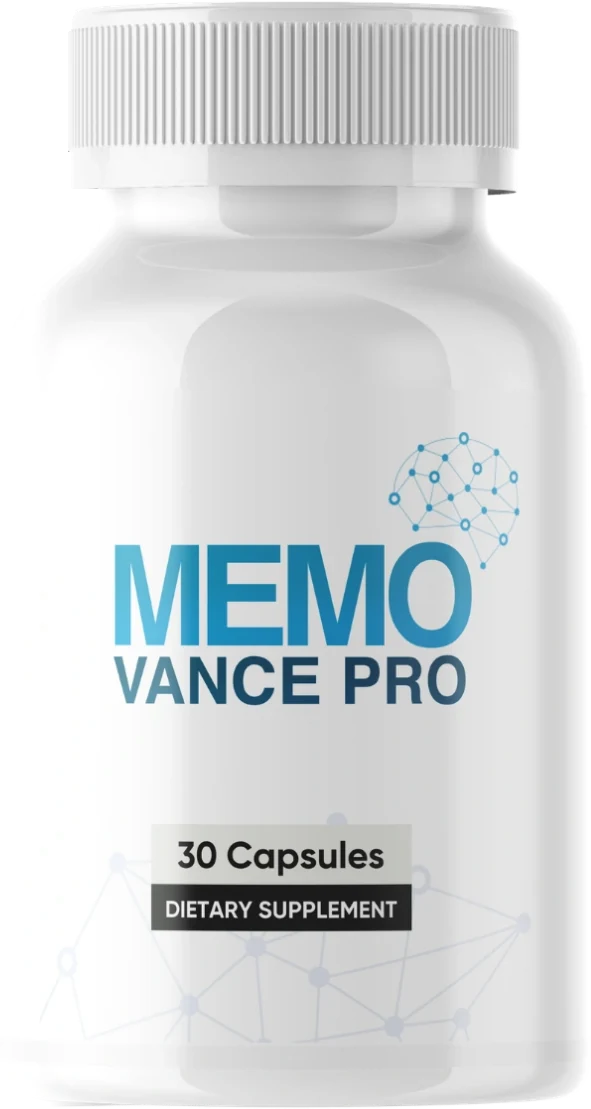
Seven rows with seven printed figures, four of them naming the chemical form. One capsule a day, three packs from $49 a bottle, and 180 days from purchase to change your mind.
$79, $69 or $49 a bottle by pack size · 180-day money-back guarantee
Order MemoVance Pro On The Official WebsiteLot MEM-26/TH-4477 · 30 capsules · 7 rows, 7 printed figures
Three: the unit may not be what you think
Niacin is printed in niacin equivalents rather than in milligrams of niacin, and the abbreviation NE is easy to read straight past.
An equivalent counts niacin itself plus the amount the body can produce from dietary tryptophan, at a conversion of roughly sixty to one. It is a nutritional convention and it makes sense for a nutrient the body partly manufactures from protein. It does mean that a figure in NE and a figure in milligrams of nicotinic acid are not the same quantity.
The same issue appears elsewhere in the vitamin aisle: vitamin A in retinol activity equivalents, vitamin E in alpha-tocopherol equivalents, folate in dietary folate equivalents. Each exists for a good reason and each breaks a naive comparison between two labels using different units.
For B3 specifically there is a further wrinkle worth knowing. The compound in the serious cognition research is nicotinamide riboside, a different molecule given at a gram a day, and no figure in niacin equivalents is comparable with it. The firmly established link between B3 and thinking runs through deficiency: pellagra produces confusion along with its skin and digestive signs.
The fourth, and the commonest
None of the three above causes as many misreadings as the line above the table.
A panel whose serving size is two or three capsules prints every figure for that serving. A row reading 600 mg on a three-capsule serving is 200 mg a capsule, and a reader comparing it against a one-capsule panel without noticing has made a three-fold error before starting.
This bottle's serving is one capsule, which removes the arithmetic entirely. That is worth saying because it is a genuine convenience rather than a virtue: a formula needing three capsules is not worse, it just needs dividing before it can be compared.
The rule is simple. Find the serving size first, every time, before reading a single row.
Four labels, all printing 100 mg
| Four labels, all printing 100 mg | What the buyer gets | Why |
|---|---|---|
| 100 mg L-citrulline | 100 mg of citrulline | Free form. Nothing else is carried along. |
| 100 mg citrulline malate 2:1 | About 72 mg of citrulline | The rest of the weight is malic acid. |
| 100 mg calcium carbonate | About 40 mg of calcium | Carbonate is about 40 per cent elemental calcium, and a US panel would declare the 40. |
| 100 mg of a 10:1 extract | Material from 1 g of the raw plant | An extract ratio describes concentration, not the amount of anything in particular. |
Four rows that look identical in a shop and differ by nearly a factor of three in what they deliver.
That table is the whole article in one place. Four rows that look identical on a shelf, delivering amounts that differ by nearly a factor of three, with no dishonesty anywhere in the chain.
The fourth row is the one this article has not otherwise covered, and it is the worst of the four. An extract ratio describes how much raw plant went into the extract; it says nothing about the concentration of whatever the research was about, which is why serious botanical labels print a standardisation percentage instead.
Doing the conversion in your head
- Hydrochloride: assume the counter-ion is a small share and read the number roughly as printed.
- Malate or citrate: assume a quarter to a half of the weight is the acid, and look for a ratio on the label.
- Mineral with a salt in brackets: the printed figure is the mineral. No conversion needed.
- Anything in equivalents: do not compare it with a figure in plain milligrams without checking what the unit counts.
- Any botanical with a ratio but no standardisation: treat the number as uninformative rather than as small.
- Always: divide by the serving size before any of the above.
Six lines, and they cover nearly every way a printed weight can mean less than it looks like it means. None of them requires a search engine and all of them can be done holding the bottle.
What a good label does instead
The conventions above are not the problem. A label that prints a ratio, a standardisation and an elemental figure has told a reader everything the format allows, and the reader can then do the sums.
The problem is a label that prints none of them, or worse, one total for a group of ingredients. On a proprietary blend every check in this article becomes impossible at once, and the reader is left with the front of the bottle.
By that standard this panel does well and not perfectly. Seven rows, seven figures, four chemical forms named and one ratio printed. The missing citrulline malate ratio is the one gap, and it is small in the context of an aisle where a blend total is the norm.
The beta alanine position stand makes a related point about quantities being stated properly in a literature, which is the research-side version of the same discipline.
Three checks in twenty seconds
- Read the serving size. Divide everything by it.
- Read the brackets after each ingredient name. A salt, a plant part, a ratio or a standardisation each changes what the number means.
- Look for a blend total. If one is there, stop: nothing above can be established.
Those three are checks one and three of the six-point scorecard on this website, applied in the order that saves the most time.
Reading a panel accurately tells you what is in a capsule. It does not tell you whether the capsule will do anything for you, and nothing on this page is medical advice. A dietary supplement is not a treatment for any condition, and a change in memory or thinking that other people have started to notice needs somebody who can examine and test rather than a better label.
References
- Martin-Olmedo JJ, Miras-Moreno S, Jaen-Carrillo D, et al. Malate or Not? Acute Effects of L-Citrulline Versus Citrulline Malate on Neuromuscular Performance in Young, Trained Adults: A Randomized, Double-Blind, Placebo-Controlled Crossover Trial. Int J Sport Nutr Exerc Metab. 2025;35(2):89-98. PMID 39662304. https://pubmed.ncbi.nlm.nih.gov/39662304/
- Aguiar AF, Casonatto J, Silva AM, et al. Effects of Citrulline Malate Supplementation on Muscle Strength in Resistance-Trained Adults: A Systematic Review and Meta-Analysis of Randomized Controlled Trials. J Diet Suppl. 2022;19(6):772-790. PMID 34176406. https://pubmed.ncbi.nlm.nih.gov/34176406/
- Zamfirescu I, Carlson HE. Absorption of levothyroxine when coadministered with various calcium formulations. Thyroid. 2011;21(5):483-6. PMID 21595516. https://pubmed.ncbi.nlm.nih.gov/21595516/
- Singh N, Singh PN, Hershman JM. Effect of calcium carbonate on the absorption of levothyroxine. JAMA. 2000;283(21):2822-5. PMID 10838651. https://pubmed.ncbi.nlm.nih.gov/10838651/
- Mengistu SB, Shiferaw BZ, Hailemariam AG, et al. Case report: Pellagra presentation with dermatitis and dysphagia. Front Med (Lausanne). 2024;11:1390180. PMID 39045418. https://pubmed.ncbi.nlm.nih.gov/39045418/
- Trexler ET, Smith-Ryan AE, Stout JR, et al. International society of sports nutrition position stand: Beta-Alanine. J Int Soc Sports Nutr. 2015;12:30. PMID 26175657. https://pubmed.ncbi.nlm.nih.gov/26175657/