MemoVance Pro Official Website › Blog › Forty Milligrams Of Beta Alanine
Forty Milligrams Of Beta Alanine Against Its Own Trials
Of the seven rows on this bottle, beta alanine is the one whose research points straight at memory rather than at a workout. It is also the smallest row on the panel. Both of those facts are worth understanding properly, and they do not cancel each other out.
- Beta alanine is the rate-limiting precursor of carnosine, a dipeptide stored in muscle and in brain tissue.
- It does nothing acutely. Any effect depends on accumulation over weeks of daily intake.
- Its family carries the most direct evidence in this whole ingredient set for a memory outcome: a pooled analysis reporting improved delayed recall.
- The trials behind that sit at 2.4 grams a day for ten weeks. This row is 40 mg.
- A fourteen-week study at 6.4 grams a day moved neither of the two outcomes it measured, which is why the question is open rather than settled.
Why this row is on a cognition label
Five of the seven rows on this bottle are amino acids of the nitric oxide pathway, which reach a cognition label by extension from exercise research. Beta alanine is different. It has nothing to do with blood vessels and it is not part of that pathway at all.
It is here because its family produced a finding aimed at the outcome on the front of the bottle. Somebody specifying this formula went looking for evidence about recall rather than about blood flow, found it, and put the ingredient in.
That is worth crediting before the rest of this article takes it apart, because the reasoning was sound. The amount is where it comes apart.
What carnosine is and where it goes
Beta alanine is an amino acid, and unusually it is not used to build proteins. Its job is to combine with histidine to form carnosine, a dipeptide stored inside cells.
Beta alanine is the rate-limiting half of that reaction, which is the reason supplements supply it rather than supplying carnosine directly: histidine is plentiful, beta alanine is the bottleneck, and carnosine taken by mouth is largely broken down before it arrives anywhere.
Carnosine accumulates in skeletal muscle, which is where the exercise literature comes from, and in brain tissue, which is where the interest for a cognition label comes from. It acts as a buffer against acidity and as an antioxidant, and both roles are plausible reasons for it to matter in a tissue working hard.
The clock that follows from this
Accumulation is slow. Nothing in this ingredient's behaviour happens within hours of a capsule, unlike every other amino acid on this panel, and any honest timeline for it is measured in weeks.
Loading is measured in grams and weeks
The sports nutrition position stand on beta alanine is the standard summary of how much and for how long. It describes loading as four to six grams daily for at least four weeks, often split into smaller doses through the day for a reason covered further down.
A carnosine loading study tested two protocols directly: 3.2 grams a day for four weeks stepping down to 1.6, against 1.6 grams a day for eight weeks. It also measured washout afterwards, which is how the field knows the accumulation is gradual in both directions.
Those are the numbers a reader should carry. Grams a day, over at least a month, with measurable carnosine as the outcome.
The trials, in one table
| Study | Daily amount | Duration | What it measured |
|---|---|---|---|
| The sports nutrition position stand | 4 to 6 g | At least 4 weeks | Summarises the loading protocols across the literature |
| A carnosine loading study | 3.2 g then 1.6 g, against 1.6 g | 4 then 4, against 8 weeks | Muscle carnosine synthesis, and washout afterwards |
| A cognition trial in older adults | 2.4 g | 10 weeks | Cognitive function, mood and physical function |
| Its imaging companion | 2.4 g | Same cohort | Diffusion MRI of the hippocampus and amygdala |
| A fourteen-week study | 6.4 g | 14 weeks | Serum BDNF and Stroop test performance. Neither moved |
Every figure read from the record cited at the foot of this article. The row on this label is 40 mg.
Read down the second column and the range is 1.6 to 6.4 grams a day. Nothing in the published work operates in tens of milligrams, and no study in this family was designed to find out whether that amount does anything.
Every MemoVance Pro row against the quantity its research used
Seven printed figures, each set beside the amount its own trials worked at. One capsule a day, packs from $49 a bottle, and 180 days from the date of purchase to change your mind.
$79, $69 or $49 a bottle by pack size · 180-day money-back guarantee
Order MemoVance Pro On The Official WebsiteLot MEM-26/TH-4477 · 30 capsules · 7 rows, 7 printed figures
The pooled recall result, read carefully
A 2024 meta-analysis of histidine-containing dipeptide supplementation pooled the trials in this family and reported improved delayed recall. That is a real finding in a peer-reviewed journal and it is the single most relevant result in the entire ingredient set on this bottle.
Two of the trials underneath it are worth naming individually. A ten-week randomised controlled study in older adults gave 2.4 grams a day and measured cognitive function, mood and physical function together. An imaging companion in the same cohort reported changes in diffusion measures in the hippocampus and amygdala, which are structures a memory claim would want to point at.
A pooled positive result plus an imaging correlate in the same population is about as encouraging as this aisle gets. And all of it sits at 2.4 grams a day for ten weeks.
The null result at a higher dose
A positive pooled finding is not the end of the story, and the counterweight is specific.
A fourteen-week study gave 6.4 grams a day alongside high-intensity interval training and measured serum BDNF and Stroop test performance. Neither moved.
That is nearly three times the dose of the positive trials, for longer, and it produced nothing on either of its two outcomes. A field with a positive meta-analysis and a clean null at a higher dose is a field where the question is genuinely open.
Which is the honest state of the evidence, and it is worth stating in exactly those terms rather than picking whichever result suits the page.
The sensation that will not happen
Beta alanine is known outside the laboratory for one thing: paraesthesia, the pins and needles across the scalp, face and forearms that a large single dose produces.
It is harmless and it is transient, and it is the reason loading protocols split the daily amount into smaller doses. It is also the reason sustained-release formulations exist.
The threshold is a single dose measured in hundreds of milligrams. At 40 mg nobody will feel anything, which is worth saying because a buyer who has read about the tingling may wait for it as confirmation that a capsule is working. It is not going to arrive, and its absence says nothing either way.
What 40 mg is doing on the panel
| Against | Multiple of this label's row | What that means |
|---|---|---|
| 2.4 g, the cognition trials | 60 times | The positive recall work sits here |
| 4 g, the floor of the loading range | 100 times | Where carnosine loading begins |
| 6.4 g, the null study | 160 times | And it moved neither of its outcomes |
| 800 mg, a rough single-dose tingling threshold | 20 times | Which is why nobody will feel this row |
Arithmetic on the printed 40 mg figure. None of it is a prediction about any individual.
The multiples in that table are the article's conclusion. Sixty times below the positive trials, a hundred times below the floor of the loading range, and twenty times below the amount that would produce a sensation.
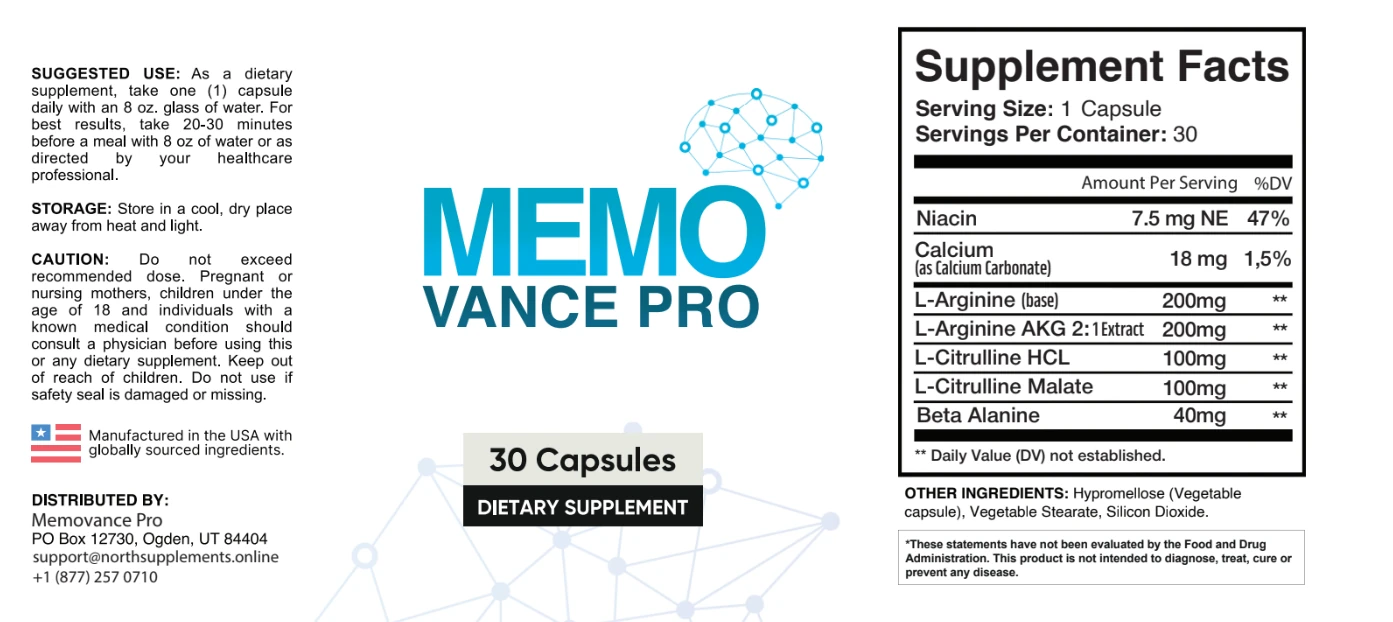
The fair description is that the row is present rather than loading. It contributes to the 640 mg total on the panel and it signals what the formula is aimed at, and no published work supports the idea that this quantity accumulates meaningfully.
None of which makes the row dishonest. The amount is printed, in plain milligrams, on the back of the bottle, where anybody can read it and do exactly the arithmetic above. A proprietary blend would have hidden it.
What would have to change
- A capsule reaching 2.4 grams would be six or seven capsules of beta alanine alone, before any of the other six rows. It is not a formulation anybody would swallow once a day.
- A sustained-release version at gram scale exists in the research literature and would be a different product in a different format.
- Splitting the dose is what the loading protocols do, and it is incompatible with a once-daily capsule.
- A powder is how this ingredient is actually taken by people following the literature, and it costs a fraction of a capsule product per gram.
- Or the row could be honest about its role, which is what printing 40 mg on the panel already does.
The last point is the one this desk keeps coming back to. A formula that prints a small number is telling you something true. A formula that hides the same number inside a blend total is telling you nothing, and the second is far more common.
The remaining six rows get the same treatment in the dosage analysis, and the results timeline explains why this row sets the slowest clock in the bottle regardless of its size.
Beta alanine at any amount is a dietary ingredient rather than a medicine, and the trials described above were conducted in specific populations at specific doses. None of their findings transfers to a capsule because an ingredient name appears in both places. If memory is the reason you are reading this, an assessment by a clinician answers a question that no supplement label can.
References
- Trexler ET, Smith-Ryan AE, Stout JR, et al. International society of sports nutrition position stand: Beta-Alanine. J Int Soc Sports Nutr. 2015;12:30. PMID 26175657. https://pubmed.ncbi.nlm.nih.gov/26175657/
- Stellingwerff T, Decombaz J, Harris RC, Boesch C. Effect of two beta-alanine dosing protocols on muscle carnosine synthesis and washout. Amino Acids. 2012;42(6):2461-72. PMID 21847611. https://pubmed.ncbi.nlm.nih.gov/21847611/
- Ostfeld I, Ben-Zeev T, Zamir A, et al. Role of beta-Alanine Supplementation on Cognitive Function, Mood, and Physical Function in Older Adults; Double-Blind Randomized Controlled Study. Nutrients. 2023;15(4):923. PMID 36839281. https://pubmed.ncbi.nlm.nih.gov/36839281/
- Ostfeld I, Ben-Zeev T, Zamir A, et al. beta-Alanine supplementation improves fractional anisotropy scores in the hippocampus and amygdala in 60-80-year-old men and women. Exp Gerontol. 2024;194:112513. PMID 38971131. https://pubmed.ncbi.nlm.nih.gov/38971131/
- Bell SM, Blackwell J, Neish B, et al. Histidine-containing dipeptide supplementation improves delayed recall: a systematic review and meta-analysis. Nutr Rev. 2024;82(10):1372-1385. PMID 38013229. https://pubmed.ncbi.nlm.nih.gov/38013229/
- Mendonca PT, Bertuzzi R, Correia-Oliveira CR, et al. Fourteen weeks of beta-alanine supplementation and HIIT did not improve serum BDNF concentrations and Stroop test performance. Int J Sports Med. 2025;46(5):324-333. PMID 39832765. https://pubmed.ncbi.nlm.nih.gov/39832765/